

Design patents cover the ornamental features of a product. Whether a design patent is infringed comes down to a visual comparison between the patented design and the accused product. Would an ordinary consumer confuse the two designs? A recent Federal Circuit decision highlights the challenges of this deceptively simple assessment.
To determine whether an ordinary consumer would confuse two designs, federal courts start by evaluating the relative similarity between the patented design and the accused infringing product. More than 150 years ago, the Supreme Court boiled this evaluation down to a question of whether the designs were “substantially the same.” Then, in 2008, a federal appeals court restated that same question as whether the designs are “plainly dissimilar.” While it may seem like the two courts are saying the same thing, how the question is asked influences the answer.
In a recent design patent infringement case, the trial court found, and the appeals court agreed, that a number of seemingly insubstantial differences outweighed what appear to be obvious overall similarities. Did they ignore the forest for the trees? In her vocal dissent in the appeal, Chief Judge Kimberly A. Moore of the Court of Appeals for the Federal Circuit explained why she thinks they did just that and why she considers the trend toward a focus on differences, instead of similarities, to be a slippery slope in the wrong direction.
In this case, the plaintiff accused the defendant of infringing its patented design for a handheld massager. The lower court found that the two designs were so “plainly dissimilar” that no reasonable jury could find that the accused product (on the left below) was infringing the patented design (on the right).
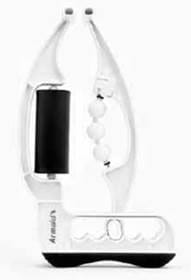
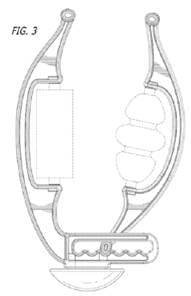
A majority of the appeals court agreed with the trial court’s decision. But as noted by the dissenting opinion, looking at these designs side by side, it is hard to believe that a consumer would never confuse them.
According to the dissent, the ruling in this case, and in several other cases over the past few years, is the result of an inadvertent reframing of the law, with the focus shifting from whether the designs are substantially similar to whether the designs are plainly dissimilar. When courts center an evaluation of the differences between the designs, they can lose sight of their overall similarity. This goes against the Supreme Court’s long-standing guidance.
For product designers trying to avoid an infringement accusation, it is important to understand visual distinctions between designs that might not be apparent at first glance. For owners of design patents, the trend toward a focus on differences might require creative arguments that emphasize the importance of perceived similarities to the consumer.
For designers and patentees alike, however, the vocal dissent condemning this apparent paradigm shift could signal more critical evaluation of trial court decisions about design patent infringement going forward. In both cases, it remains crucial to seek the advice of attorneys experienced in the complexities of design patent analysis.
The case is Range of Motion Products, LLC v. Armaid Company, Inc., 2023-2427 (2026).To learn more about how this decision could impact your rights, please contact the author or any member of the Intellectual Property Group at McCarter & English, LLP.