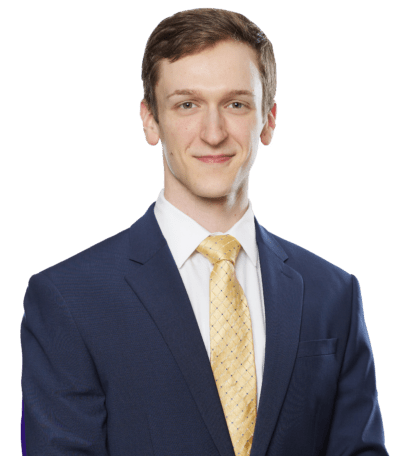
Dean Elwell represents businesses and individuals in white collar criminal defense, commercial litigation, and appellate matters. With a focus on federal litigation, Dean has handled cases involving RICO, FCA, public corruption, healthcare fraud, securities fraud, wire fraud, tax fraud, national security, civil rights, antitrust, and trade secrets. Dean also has substantial experience with matters involving common law fraud, breach of contract, unfair competition, restrictive covenants, and business torts. As a Special Assistant District Attorney from 2022 to 2024, Dean investigated and prosecuted conflict cases for the Commonwealth of Massachusetts.
In 2025, Dean was elected to the Board of Directors of the Federal Bar Association, Massachusetts Chapter. He also serves as a Member and Symposium Co-Chair of the Complex Commercial Litigation Section Council of the Massachusetts Bar Association, which publishes BLS Bench Notes, a guide to practice in the Business Litigation Session of the Massachusetts Superior Court. Dean is a member of the Massachusetts Editorial Advisory Board for Law360.
Dean maintains an active pro bono practice, volunteering with Greater Boston Legal Services, Veterans Legal Services, and the Volunteer Lawyers Project of the Boston Bar Association. He received the firm’s 2025 Pro Bono Award for his trial victory on behalf of a lawful permanent resident facing removal proceedings.
Before joining McCarter, Dean clerked for Judge William G. Young in the US District Court for the District of Massachusetts and interned for Judge Bruce M. Selya in the US Court of Appeals for the First Circuit and Justice William P. Robinson III in the Rhode Island Supreme Court. During law school, Dean worked in the Civil and Criminal Divisions of the US Attorney’s Office in Boston and as a research assistant to Professor Daniel R. Coquillette, Senior Editor of Moore’s Federal Practice and Reporter to the Committee on Rules of Practice and Procedure of the Judicial Conference of the United States. Dean was recognized for best brief and top oralist in the Wendell F. Grimes Moot Court competition, and his publication in the Boston College Law Review is now required reading in an advanced evidence course.